
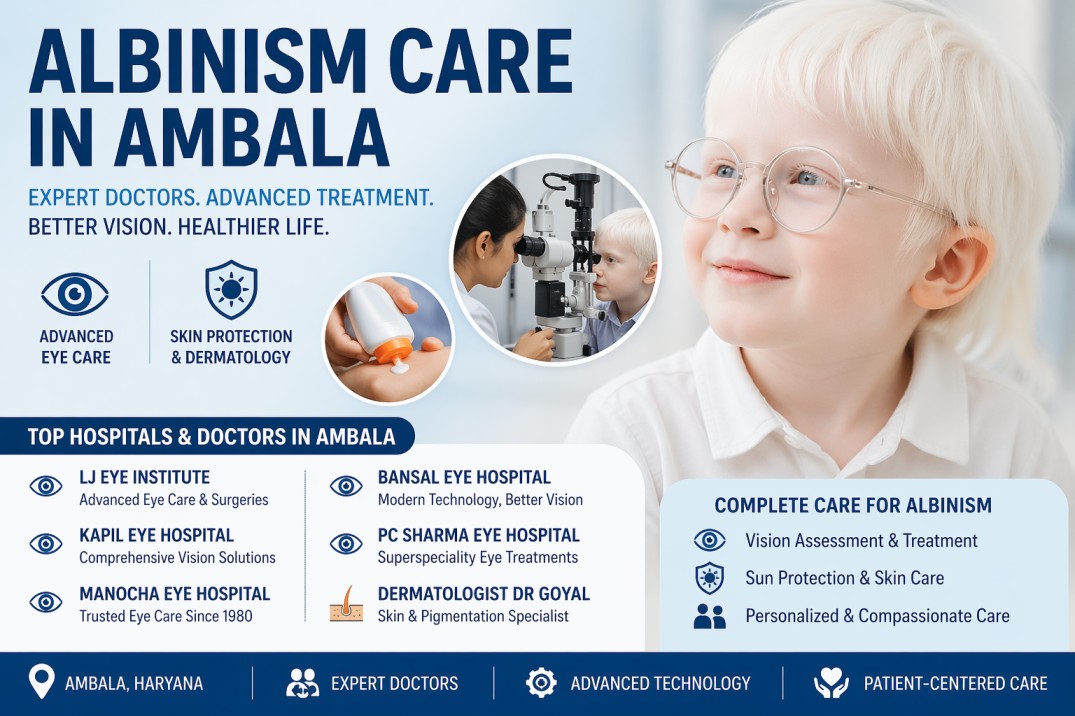

Complete Care for Albinism in Ambala: Trusted Doctors & Hospitals
Albinism is a rare genetic condition that affects the body’s ability to produce melanin, the pigment responsible for coloring the skin, hair, and eyes. While it does not affect intelligence or growth, it often brings vision challenges and increased sensitivity to sunlight, making specialized medical care essential.
In Ambala, patients with albinism can access high-quality treatment through a combination of advanced eye hospitals and experienced dermatologists. This article highlights some of the most trusted centers and doctors providing comprehensive care.
Specialized Eye Care for Albinism
Vision problems are one of the most significant concerns in albinism. Issues like low vision, light sensitivity (photophobia), and involuntary eye movements (nystagmus) require expert attention.
LJ Eye Institute
One of the most advanced eye hospitals in the region, LJ Eye Institute offers cutting-edge diagnostic and surgical treatments. Their team specializes in cornea, retina, and pediatric ophthalmology, making it an excellent choice for children and adults with albinism.
Kapil Eye Hospital
Known for its experienced ophthalmologists, Kapil Eye Hospital provides comprehensive vision care, including refractive error correction and squint treatment, which are common in individuals with albinism.
Manocha Eye Hospital
With decades of experience, Manocha Eye Hospital is a trusted name in eye care. The hospital offers a wide range of treatments and personalized care plans for managing long-term visual conditions.
Bansal Eye Hospital
Bansal Eye Hospital is well-known for modern procedures like LASIK and cataract surgery. It also provides regular vision assessments and corrective solutions essential for albinism patients.
PC Sharma Eye Hospital
A superspeciality center offering advanced laser treatments and surgical care, PC Sharma Eye Hospital is equipped to handle complex eye conditions with precision.
Skin Care & Protection
People with albinism are highly sensitive to sunlight and are at greater risk of skin damage. Regular dermatological care is crucial.
Dermatologist Dr Goyal Clinic
This clinic specializes in skin and hair treatments, offering guidance on sun protection, pigmentation care, and preventive skin health—all vital for individuals with albinism.
Importance of a Combined Approach
Managing albinism effectively requires a multi-disciplinary approach:
- Ophthalmologists help improve vision and reduce eye strain
- Dermatologists ensure skin protection and prevent sun damage
- Regular check-ups help in early detection of complications
Tips for Patients with Albinism
- Wear UV-protective sunglasses and wide-brim hats
- Use high-SPF sunscreen daily
- Schedule routine eye exams
- Consider low-vision aids for better daily functioning
Conclusion
Ambala offers access to some of the most reliable eye and skin care specialists for managing albinism. Hospitals like LJ Eye Institute and Kapil Eye Hospital, along with expert dermatology support from Dermatologist Dr Goyal Clinic, ensure that patients receive comprehensive, high-quality care.
With the right medical guidance and lifestyle precautions, individuals with albinism can lead healthy, confident, and fulfilling lives.
FAQ
What causes albinism?
Albinism is caused by mutations in genes involved in melanin production. A child usually develops albinism when both parents carry the altered gene and pass it on. It is most commonly inherited in an autosomal recessive pattern.
Is albinism a disease or a genetic disorder?
Albinism is not an infectious disease; it is a lifelong genetic disorder present from birth. It affects pigmentation and eye development but does not spread from person to person.
What are the common symptoms of albinism?
Common symptoms include very light skin, white or light-colored hair, pale eyes, poor eyesight, sensitivity to bright light, involuntary eye movements, and frequent sunburn due to reduced skin protection
Can albinism affect eyesight?
Yes. Vision problems are one of the major features of albinism. Many individuals may experience blurred vision, nystagmus (rapid eye movement), crossed eyes, photophobia, or reduced depth perception.
Is there a permanent cure for albinism?
Currently, there is no permanent cure for albinism because it is a genetic condition. However, proper eye care, low-vision aids, sunscreen protection, and regular skin checkups can help patients live healthy lives
Can people with albinism live a normal life?
Yes, absolutely. With early diagnosis, vision support, UV protection, and regular medical monitoring, most people with albinism can live long, productive, and healthy lives.
Community experiences also show that many adults with albinism work, study, raise families, and manage the condition successfully with routine precautions.
How is albinism diagnosed?
Doctors diagnose albinism through physical examination, detailed eye testing, family history review, and genetic testing to identify the exact gene mutation causing the condition
Is albinism dangerous?
Albinism itself is not usually life-threatening, but it can increase the risk of severe sunburn, skin damage, skin cancer, and visual impairment if not managed properly. Some rare syndromic forms may also involve bleeding or immune-related complications.
Can albinism be prevented?
Albinism cannot usually be prevented once the genes are inherited, but genetic counseling can help families understand the risk before pregnancy and make informed decisions regarding future children.