
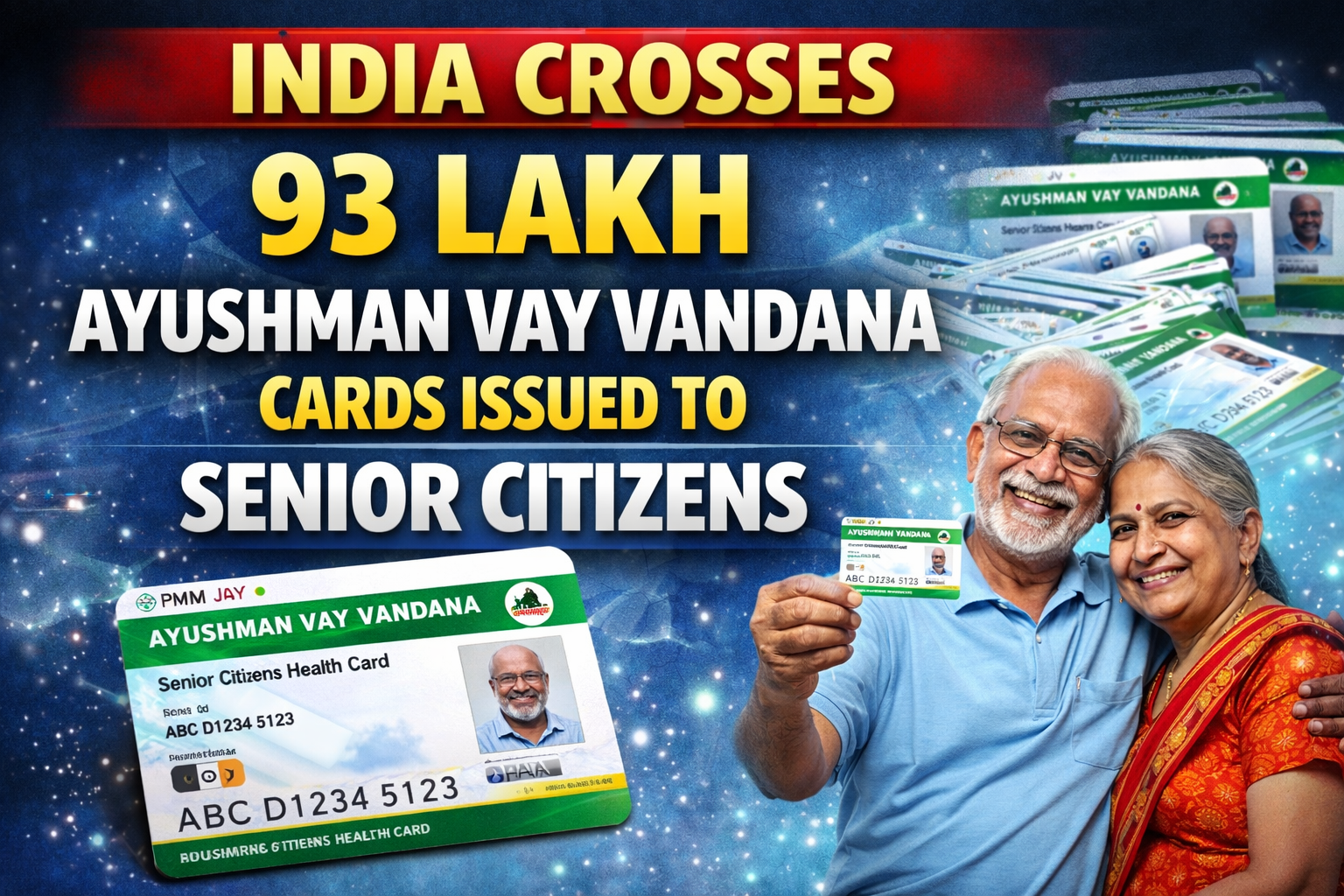

India has achieved a significant milestone in its healthcare journey by issuing over 93 lakh Ayushman Vay Vandana Cards to elderly citizens across the country. This initiative marks a major step toward strengthening senior citizens health insurance and ensuring accessible, affordable, and quality healthcare services for the ageing population. With the rapid growth of India’s elderly demographic, the government’s commitment to inclusive health coverage is more important than ever.
The Ayushman Vay Vandana Card, launched under the Ayushman Bharat Pradhan Mantri Jan Arogya Yojana framework, aims to provide enhanced healthcare benefits to individuals aged 60 years and above. This achievement reflects not only administrative efficiency but also the growing awareness among families about the importance of securing reliable health protection for their elderly members.
Understanding the Ayushman Vay Vandana Card Scheme
The Ayushman Vay Vandana Card is designed to provide comprehensive medical coverage to senior citizens, especially those belonging to economically vulnerable sections. The scheme offers cashless treatment at empanelled hospitals for a wide range of medical procedures, ensuring timely access to quality healthcare without financial strain.
This initiative strengthens the foundation of senior citizens health insurance in India by addressing critical gaps in healthcare access. Under this programme, eligible beneficiaries receive coverage for hospitalisation, diagnostics, surgeries, and post-treatment care. The scheme also simplifies the process of availing benefits through digital identification and streamlined hospital onboarding.
By focusing on inclusivity, the Ayushman Vay Vandana Card ensures that elderly citizens, particularly those in rural and semi-urban regions, receive equitable healthcare services without administrative barriers.
Growing Need for Senior Citizens Health Insurance in India
India’s demographic structure is undergoing a significant transformation, with the population of elderly individuals steadily increasing. Rising life expectancy, improved healthcare facilities, and better living standards have contributed to this demographic shift. However, ageing also brings higher healthcare needs, making senior citizens health insurance an essential financial safeguard.
Medical expenses for elderly individuals tend to be higher due to chronic illnesses, frequent hospital visits, and long-term treatments. Conditions such as diabetes, cardiovascular diseases, arthritis, and respiratory ailments are more prevalent among older adults, increasing the demand for reliable health coverage.
The issuance of 93 lakh Ayushman Vay Vandana Cards highlights the growing awareness of health insurance among families and caregivers. It also reflects a broader shift toward proactive healthcare planning and financial preparedness for old age.
Key Benefits of Ayushman Vay Vandana Cards for Elderly Citizens
The Ayushman Vay Vandana Card provides extensive healthcare benefits that significantly enhance the quality of life for senior citizens. Some of the key advantages include access to cashless hospitalisation, coverage for a wide range of medical procedures, and financial protection against high treatment costs.
This scheme also reduces the dependence of elderly individuals on family members for medical expenses, promoting financial independence and dignity. By strengthening senior citizens health insurance, the initiative ensures that elderly citizens can seek timely medical care without hesitation.
Additionally, the scheme supports preventive healthcare by encouraging regular check-ups and early diagnosis, which are critical for managing age-related health conditions effectively.
Impact on Healthcare Infrastructure and Service Delivery
The widespread adoption of the Ayushman Vay Vandana Card has positively influenced healthcare infrastructure and service delivery across India. Hospitals and healthcare providers are increasingly empanelled under the scheme, expanding the network of accessible facilities for beneficiaries.
This expansion improves healthcare accessibility, particularly in underserved regions, bridging the urban-rural healthcare gap. The initiative has also encouraged hospitals to upgrade their facilities, adopt digital health records, and streamline patient management systems.
The strengthened healthcare ecosystem benefits not only senior citizens but also the broader population by enhancing overall service quality and efficiency.
Role of Individual Health Insurance in Senior Healthcare Planning
While government-backed initiatives play a crucial role, individual health insurance policies remain an important component of comprehensive healthcare planning for senior citizens. Individual health insurance plans offer flexibility, wider hospital networks, and customised coverage options tailored to specific health needs.
Many families opt for individual health insurance policies to supplement government schemes, ensuring broader coverage for specialised treatments, private healthcare facilities, and advanced medical procedures. These policies often include benefits such as critical illness coverage, domiciliary treatment, and wellness programmes.
By combining public and private insurance options, families can create a robust healthcare safety net that addresses diverse medical needs and financial constraints.
How Ayushman Vay Vandana Cards Complement Individual Health Insurance
The Ayushman Vay Vandana Card and individual health insurance can work together to provide comprehensive protection for senior citizens. While the government scheme offers essential coverage for hospitalisation and major treatments, individual plans can cover additional services such as premium hospital rooms, specialised therapies, and extended rehabilitation.
This complementary approach allows families to maximise healthcare benefits while minimising out-of-pocket expenses. It also provides flexibility in choosing healthcare providers and treatment options, enhancing overall patient satisfaction and health outcomes.
Such integrated insurance planning ensures that elderly individuals receive continuous and uninterrupted medical care throughout their later years.
Challenges in Expanding Senior Citizens Health Insurance Coverage
Despite the significant progress, expanding senior citizens health insurance coverage in India faces several challenges. These include limited awareness in remote areas, digital literacy barriers, documentation issues, and infrastructural constraints.
Many elderly individuals are unfamiliar with online registration processes or lack access to digital devices, making enrolment challenging. To address this, government agencies and non-governmental organisations are conducting outreach programmes, awareness campaigns, and door-to-door enrolment drives.
Strengthening last-mile connectivity and simplifying administrative procedures are essential for achieving universal healthcare coverage for senior citizens.
Economic and Social Implications of Wider Insurance Coverage
The large-scale issuance of Ayushman Vay Vandana Cards has broader economic and social implications. Improved healthcare access reduces the financial burden on families, enabling better allocation of household resources toward education, nutrition, and housing.
From a social perspective, enhanced senior citizens health insurance coverage promotes dignity, independence, and social inclusion among elderly individuals. It empowers them to lead healthier, more active lives, contributing positively to community well-being.
At a macroeconomic level, improved health outcomes among senior citizens reduce long-term healthcare costs and enhance productivity within the healthcare sector.
Future Outlook for Senior Citizens Health Insurance in India
The milestone of issuing over 93 lakh Ayushman Vay Vandana Cards sets a strong foundation for the future of senior citizens health insurance in India. Continued policy support, increased funding, and technological advancements are expected to further strengthen the healthcare ecosystem.
Future initiatives may include expanded coverage limits, inclusion of outpatient treatments, enhanced preventive healthcare services, and integration of digital health platforms. These developments will contribute to more comprehensive and accessible healthcare for the ageing population.
Additionally, partnerships between public and private insurers can drive innovation, improve service quality, and expand insurance penetration across diverse socio-economic groups.
Importance of Awareness and Education in Insurance Adoption
Raising awareness and promoting health literacy are critical for increasing the adoption of individual health insurance and government-backed schemes among senior citizens. Community outreach programmes, digital campaigns, and grassroots engagement can play a vital role in educating families about insurance benefits and enrolment processes.
Simplified communication, multilingual resources, and assisted registration services can help overcome barriers related to age, literacy, and technology. These efforts ensure that no eligible beneficiary is left behind.
Conclusion
India crossing the milestone of issuing 93 lakh Ayushman Vay Vandana Cards represents a transformative step in strengthening healthcare access for the elderly. By reinforcing senior citizens health insurance, the initiative ensures financial security, improved health outcomes, and enhanced quality of life for millions of older adults.
When complemented with individual health insurance, this government-backed scheme creates a comprehensive healthcare safety net that addresses diverse medical needs. As India continues to advance its healthcare infrastructure and insurance ecosystem, such initiatives will play a pivotal role in building a healthier, more inclusive society.