
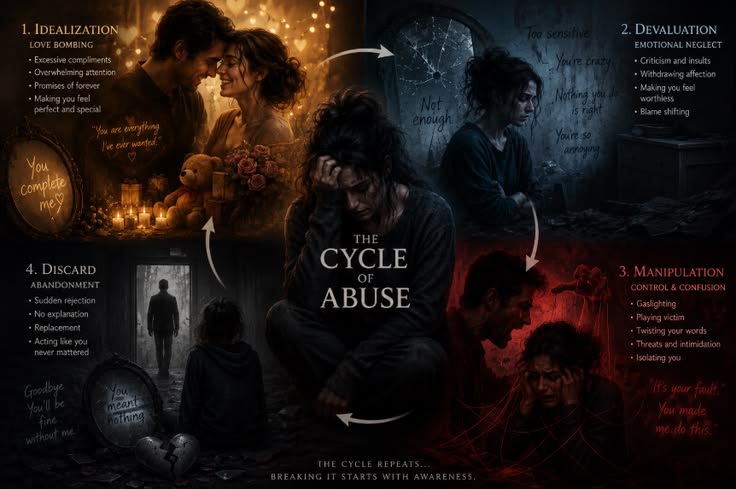

Recovery from emotional manipulation is not a one night stand. People who survive narcissistic relationships often come out feeling dazed, depleted, and separated from themselves. One of the main reasons why recovery feels so difficult is because the narcissist cycle of abuse is a repeating emotional pattern designed to create dependency, confusion, and psychological attachment.
The first step to getting out of it is understanding this cycle. At Narcissistic Abuse Rehab, we work with survivors to help them recognize these patterns, regain emotional strength, and rebuild confidence after trauma.
It lays out the process of healing after abuse, why confidence is so terribly damaged, and what real-world steps survivors can take to rebuild their lives.
Understanding the Impact of Narcissistic Abuse
It is important to understand what survivors are healing from before healing can begin. Narcissistic abuse is not always physical; it is often emotional, psychological, and subtle. It can involve manipulation, gaslighting, silent treatment, and emotional withdrawal.
The narcissist abuse cycle usually consists of a number of stages, including idealization, devaluation, discard, and sometimes hoovering. This pattern of repetition creates emotional highs and lows that make it hard for survivors to see the relationship as unhealthy.
Over time, this cycle damages self-esteem, weakens emotional boundaries, and creates confusion about what is real and what is manipulation.
We at Narcissistic Abuse Rehab believe that understanding the narcissist cycle of abuse is not about blaming yourself; it’s about understanding the system that kept you stuck.
Why Survivors Lose Confidence After Abuse
One of the most painful side effects of the narcissist cycle of abuse is a loss of self-confidence. Survivors often describe a sense of uncertainty about their choice, about their memories, and about their value.
This happens because the cycle swings between affection and rejection. Survivors may feel very valued in the “idealization” stage. In “devaluation” they may feel criticized or discarded. This emotional inconsistency creates self-doubt.
This is when the idea that love is something you have to earn, by behavior, perfection, or compliance, begins to settle in the brain. That’s why rebuilding confidence after the narcissist cycle of abuse takes time and intentional healing.
Step 1: Recognizing the Abuse Clearly
Healing begins when the survivors witness the pattern they suffered in its totality. A lot of people get stuck trying to make sense of inconsistent behavior.
Knowing the narcissist cycle of abuse clears up confusion. It helps survivors to know that the kindness they received was part of a cycle, not a constant state of love.
Then the confusion begins to clear up, and it’s replaced by emotional clarity. Survivors start to see patterns, not isolated incidents.
At Narcissistic Abuse Rehab, we encourage survivors to learn about emotional manipulation to help them get clarity and reduce self-blame.
Step 2: Breaking Emotional Conditioning
It is emotional conditioning, so survivors are conditioned to respond to unpredictable behavior. The narcissist abuse cycle. This is often augmented with intermittent reinforcement, times of affection, and then withdrawal or criticism.
This cycle creates a strong emotional attachment even when this can be harmful. Survivors may become addicted to the hope of returning to the ‘good version’ of the relationship.
Overcoming this conditioning requires awareness and distance. Once survivors understand the cycle of abuse used by narcissists, they can start to separate themselves from emotional triggers and stop seeking validation from the abuser.
Step 3: Rebuilding Self-Worth
Many survivors have low self-worth after leaving the cycle. It’s a direct result of long-term emotional manipulation in the narcissist cycle of abuse.
Rebuilding self-worth is about reestablishing your identity. It allows survivors to rediscover their interests, values, and limits.
Simple daily actions such as journaling, self-reflection, and positive self-talk can gradually restore confidence. The goal is not to become someone new, but to reconnect with who you were before the abuse.
Here at Narcissistic Abuse Rehab, we tell survivors that confidence isn’t gone forever; it’s just buried under emotional conditioning.
Step 4: Relearning Trust in Yourself
A distrust of one’s own self is one of the most devastating wounds inflicted by the narcissist cycle of abuse. Survivors often lose faith in their own instincts because they were told over and over that their feelings were wrong or exaggerated.
Healing is a slow rebuilding of trust in your own judgment. This can start with little decisions—what to eat, where to go, and how to spend your time.
Each decision is a way of building confidence within yourself. Survivors learn in time that their feelings and thoughts are real and trustworthy.
This step is critical to break free from the long-term effects of the narcissist cycle of abuse.
Step 5: Setting Boundaries Without Guilt
Boundaries are an essential part of recovery. However, survivors often feel guilty about setting boundaries because the narcissist cycle of abuse teaches them to put others’ needs ahead of their own.
Healthy boundaries aren’t punishment. They’re protection. They create emotional safety and prevent further manipulation.
Saying no, limiting contact, or cutting out toxic influences is a healing process.
At Narcissistic Abuse Rehab, we teach that boundaries are not selfish. They are necessary for emotional survival and long-term recovery.
Step 6: Healing Trauma Bonds
Trauma bonding is one of the most powerful effects of the narcissist’s cycle of abuse. This occurs when emotional pain and moments of affection are merged together and form a very powerful psychological bond.
Even after survivors leave the relationship, emotional memory and hope can still pull them back.
Healing trauma bonds takes time, education, and emotional distance. As survivors learn about the narcissist cycle of abuse, they begin to see the difference between love and control.
This awareness is a tipping point in recovery.
Step 7: Rebuilding Identity and Emotional Strength
Many survivors of abuse feel that they have lost themselves after leaving the abuse. That’s because the cycle of abuse for the narcissist is often comprised of emotional invalidation and the eroding of identity.
Rebuilding identity means reconnecting with passions, rebuilding social connections, and finding joy again.
Survivors are beginning to feel more resilient and grounded emotionally. Confidence is not created from external validation but from internal stability.
Survivors at this stage often say they feel clearer, calmer, and more self-aware than before.
The Role of Support in Healing
You weren’t supposed to heal alone from the narcissist cycle of abuse. Therapists, support groups, or recovery communities can help a lot with emotional recovery.
Talking to others who experience narcissistic abuse helps to reduce feelings of isolation and to validate personal experiences.
Narcissistic Abuse Rehab offers education and support to help survivors understand what they experienced and to regain emotional health.
Moving Forward With Confidence
Recovery is not forgetting the past but creating a better future. When people survive and come to understand the narcissist cycle of abuse, they often come out with more emotional awareness, stronger boundaries, and greater self-respect.
Healing takes time, but every step forward counts. As time goes by, awareness, self-compassion, and regular emotional work begin to rebuild confidence.
Conclusion
Survivors get caught in the narcissist cycle of abuse through emotional manipulation, confusion, and dependency. But knowing this cycle is the way out.
Recovery is possible when you learn to recognize the patterns, rebuild your self-worth, and learn to trust yourself again. We are Narcissistic Abuse Rehab, and we help survivors transform pain into power and build lives of clarity, confidence, and emotional freedom.
Healing is not an option; it’s the way you go.