
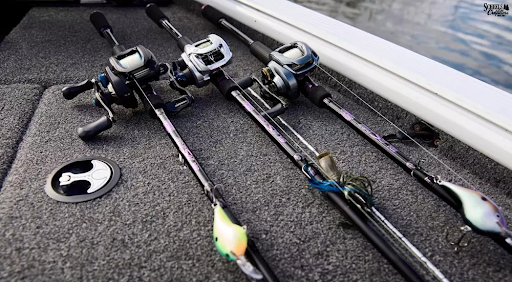

Rather than your usual luggage, fishing voyages, spontaneous trips, or any multi-year fishing trip require smart packing. An easy-to-reach fishing rucksack is intended to hold one’s gear and allow one to access all that one may need at the appointed time. The traveler angler who intends to travel with a smooth setup of a travel rod, baitcaster rods, and with perhaps a multi-purpose fishing pole would gain much from a well-organised storage facility. Again a first-time well-organised tackle bag will impinge conversely on whether the session will be smooth or completely chaotic.
In this blog, you are going to discover a few awesome tips on how best to organize your bag with a journey rod in mind and maxing out the rest of your space within the pack. Once these set-up rod bags are on you, no matter what, you are ready to go, well rigged.
- Select the Rucksack
Real organization sets in when you buy that fishing-themed rucksack. Look for a rucksack that has:
Padded compartments or box inserts
Speaking of designing, the bag should have multiple openings from the top, side, and front, making it a very versatile carry-on for any baitcaster. He must have a purpose-built design that provides robust protection from weather for baitcaster containers during travel. This design can also have waterproof materials and zippers. The zippers should also be corrosion-resistant. It must be completed with external attachment loops needed to carry the containers for rods or higher poles.
For longer journeys, it is recommended to pack a backpack with a dedicated internal rod sleeve, hard or soft, or padded compartment for the travel rod or baitcaster rod that breaks down into short sections, ensuring that the rod can reach its designated destination in perfect condition.
Designate a Section for Your Travel Rod
A general faux pax many anglers make is just throwing a travel rod on its side among other gear. This often disables a fly rod or adds to setup time. Here are some ways on storing your rods that will not beam your pride and joy when you finally arrive at that world-class destination.
- Separately open partition: In case the travel rod consists of various pieces, arrange for a segmented rod sleeve to wrap a cloth around each piece to prevent scratching. It should be placed gently along the internal side of the bag or perpendicular to the spine to keep pressure off the rod.
- Rod tube users: If you use hard cases, besides attaching the tube on the exterior with side straps or daisy chains, make sure to remain fixed tightly, and it shouldn’t swivel due to side motion while walking or climbing, where there are often steps. Quick access: When you will hike to different spots at once, toss the travel, telescopic rod down into a pocket that you can flip to the side of your rucksack.
- Balance the Weight for Comfort
Balancing a baitcasting rod or fishing pole the wrong way will lead to imbalanced forces felt in your muscular back for the days ahead. Ideally, any heavy gear should be close to your spine, in turn close to the center of the backpack. Other articles such as tackle boxes, line, and lures can be thrown on the top or on the outer compartments.
Use the bottom compartment when keeping rainwear or lightweight handy net; keep an eye on rods leaning vertically, both internally and externally, to maintain symmetry.
- Separate Wet from Dry
When angling in a place known for salt waters or humidity, always store the wet gear separately from the dry one. When you can, put your travel rod in dry sacks after using it, especially after mopping up any salty sea spray or rain that may have made the rod wet. The quicker any moisture has taken care of the rods and the like, the better, especially for baitcaster rod setups comprising internal bearings.
Try carrying a small microfiber cloth in your side cargo pocket so you can dry the gear before packing it.
- Label and Layer Your Gear
Without some organization, a fishing backpack often becomes a gear black hole. Try to place things in layers or packing cubes:
- Top Layer: Snacks, maps, or first aid kit
- Middle Layer: Main fishing gear: reels, lures, leader line
- Bottom Layer: Clothes, backup gear, camping gear
- Side Pockets: Pliers, knife, headlamp, sunscreen
- Rod Storage: Attached to external loops along the back and on the respective sides
Now things are not only going faster but the fishing pole or travel rod will never be buried beneath some other gear.
- Modular Add-ons
An ideal fishing backpack is designed in a way that allows attachment of external pouches, holders for fishing rods or hip belt attachments. Therefore, for baitcaster rod users, it adds an extra layer of protection from reel defeat and breakage, due to exposed location and spincast style respectively.
Therefore, when on your way to your fishing spot, a holder tacked on using a MOLLE-strapped configuration can be a huge opportunity; by this means, you get to enjoy working hands-free yet carrying a rod that falls a mere handful of inches from you.
- Maintenance After Every Trip
Once home, avoid just dumping all the gear into storage. Bring out your travel rod, clean it, inspect for any cracks, and let it dry completely before packing it back. The same routine should be repeated on the baitcaster rod and reel. Salt, dirt, and moisture can cut the lifespan of your gear, and an angler, well-organized, should always think a step ahead.
Final Thoughts
If you are a weekend warrior or someone always chasing new waters, then a well-stocked fishing rucksack and associated primary functions for an eased experience must be right up your alley. Travel rods and reels of baitcaster and other forms of slender gear are gaining importance, so smart storage space is about far more than just looks; it secures your investment for continued use and provides a balanced way of living while investing your free time next to a delightful sight of water.
Take control of rucksack organization and the organization of few of the gear and concentrate on loads of fun.